
I’ve been reading my “study leave” books, but not a whole lot. Over the past week, I’ve read the preface of one book, and the prologue of another. I’d hoped to pick a book to maybe work through, but am finding that a bit challenging*.
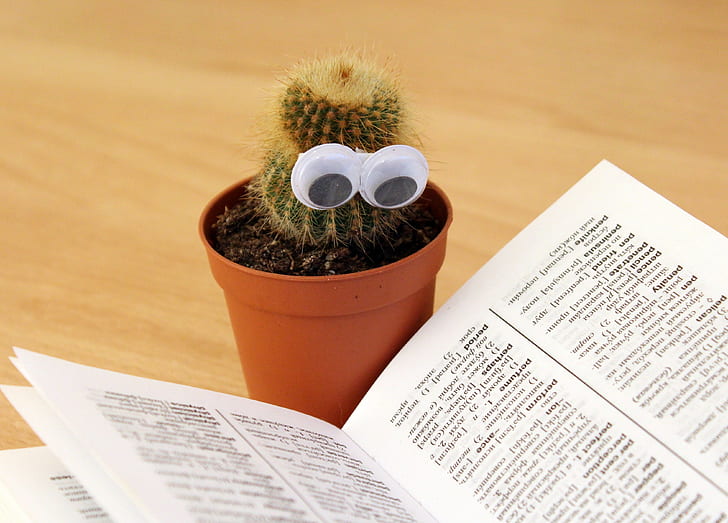 Thinking about my plan to post at least once a week about my study leave reading, I spent some time thinking “I failed”. Looking at what I’d actually written about my plan, though, I only promised to share something big or small that I read about … Surely I can share something small!
(Getting a bit meta … This leads me to wonder how often my students worry about having failed tasks I’ve asked them to do that are incredibly artificial and/or not terribly well defined? Something for me to think about further, as well as providing more opportunities for productive failure.)
 The prologue I read was in What a Plant Knows, A Field Guide to the Senses: Updated and Expanded Edition by Daniel Chamovitz (MacMillan publishing, Amazon.ca, Bookshop.org). As part of the prologue, Chamovitz mentions “My book is not The Secret Life of Plants” and how that book, first published in 1973, shared pseudoscientific ideas about plant feelings, communication, and sentience. (I initially was very confused, as I had mixed this up with David Attenborough’s amazing 1995 documentary “The Private Life of Plants” … which is actually scientific and beautiful and amazing!)
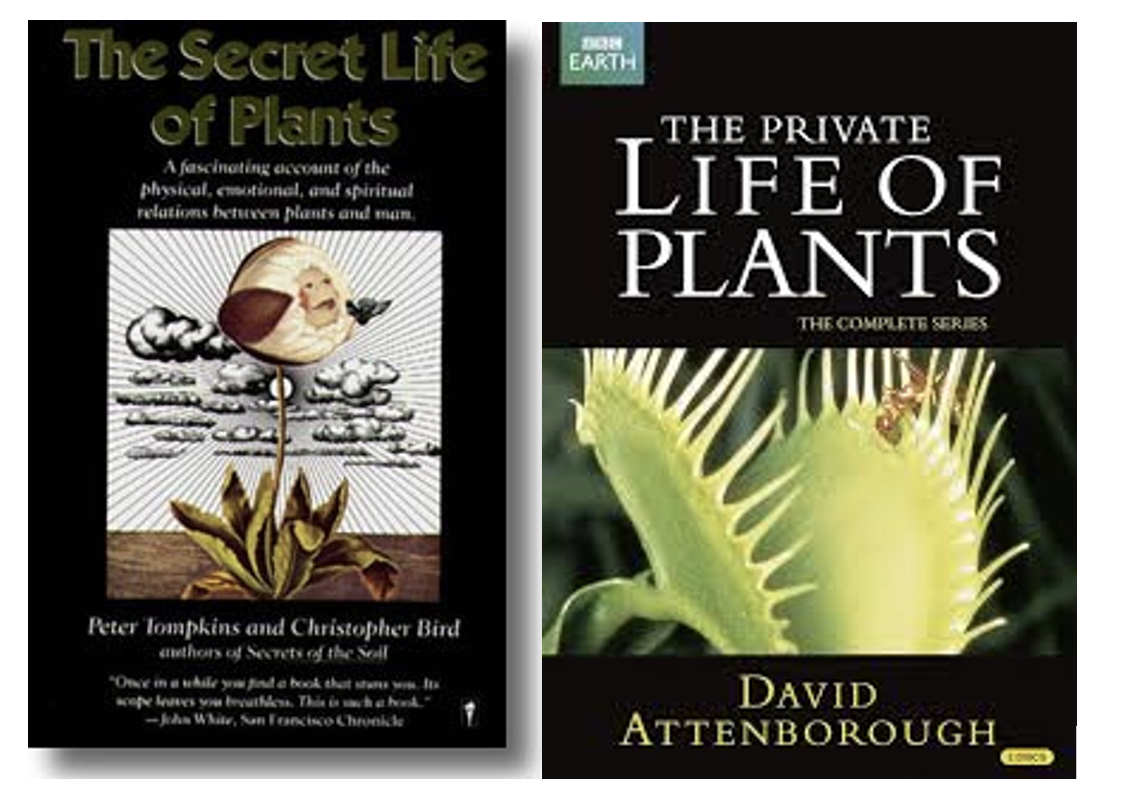
Once my confusion cleared up, I took a look for more information about The Secret Life of Plants (see Wikipedia) by Peter Tompkins and Christopher Bird, including its descriptions of experiments on plants using polygraphs by Cleve Backster. Backster was a CIA interrogation specialist who believed that living things, including plants, have “primary perception” that allows them to sense and respond to human thoughts/emotions. (More Wikipedia, if you’re interested in “plant intelligence”, and want to jump into the same rabbit holes I followed.) A documentary based on the book was released in the late 1970s, and it looks like there are copies on YouTube.
I have to note … these ideas weren’t exactly news to me. I know I’d been introduced to them, likely as a fairly young kid, and accepted them as facts. I can sort of picture a distressed plant polygraph experiment, even if I can’t be sure if I actually saw something, or if this is a mental image constructed after someone mentioned this. (I wondered if it had been in a segment of the TV show That’s Incredible!, which I regularly watched back in the early 80s … and spent a silly amount of time checking out on YouTube yesterday, without success**. Though I did come across this carnivorous plant clip, so maybe it wasn’t a total waste of time***.) It didn’t seem out of the realm of possibility that plants COULD have more senses and capabilities than people suspected (and, that is actually true, even if the polygraph experiments and specific claims are not). I believed this was valid for a long time, myself, and can’t actually say when I learned better. (When did I last even THINK about this claim? I might have seen the episode of MythBusters where they busted the myth of primary perception ****.) I feel like I should be clear here – although plants have amazing capabilities and their own sensory systems, plant systems are markedly different from animal ones. Experiments done by Backster have not been replicated, and reputable biologists have rebutted the wild claims made about plant intelligence/cognition.
So, I guess this prologue-inspired musing has at least reminded me of how easily our prior knowledge can be established – not just in Everyone Else, but myself. I’m very interested in misconceptions in science education, and what educators can do to help unseat/replace them, but feel like I’m moving further and further away from the novice mind, at least in biology topics.
Thanks for reading!
* I’m sure a lot of folks are having trouble concentrating on things right now … I feel like I should add a disclaimer or something in recognition of the events that have happened/are happening and make other things about work/life seem much less pressing/important, at least for some of us. Yet, we have work/life to attend to, navigating as we can.
** My research was not very thorough. It consisted of me quickly skimming through episodes shared in this playlist, which may not be comprehensive, and I may have easily missed a short segment. And if you know of some late-7os or 80s show that might have demonstrated polygraphs and tortured plants, please let me know!
 *** I also feel like watching parts of That’s Incredible! gives a bit of insight into the world that shaped my formative years. I had remembered some of the dramatic human interest stories, portraits of “heroes”, feats of physical prowess, and supernatural subjects (ghost photography!!!), but hadn’t realized how much actual science was included. How was an 80s viewer to discern between actual biology and bunk? (There’s probably more to unpack, of course. When’s the next season of Stranger Things coming out?)
**** Many full episodes of MythBusters are freely available on YouTube, but I don’t see this one. Looks like it’s available on Plex (and max) in the US.
 Nucleoid